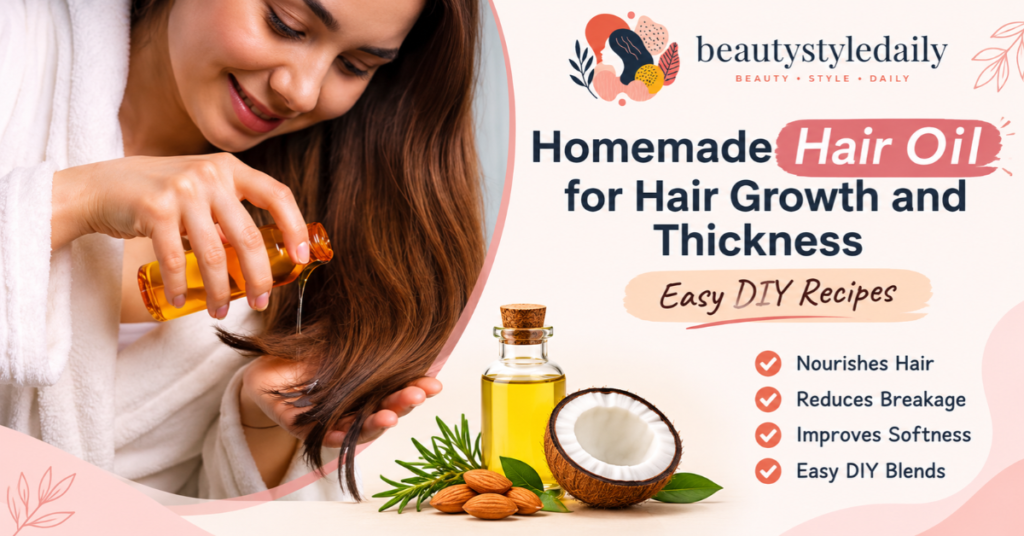
Healthy, resilient-looking hair often begins with a regular hair-care routine. If your hair seems dry, coarse, or likely to snap, Homemade Hair Oil for Hair Growth can help boost softness and make it easier to manage. Many people include coconut oil and other botanical oils in their hair-care regimen. These options are widely available and generally easy to use.
That said, homemade hair oil cannot promise quicker hair growth or thicker hair density. Some oils may nourish and coat strands, limiting damage and helping hair appear healthier with time. Ongoing thinning or heavy shedding may signal an underlying issue that needs professional guidance.
In this guide, you will learn how to make homemade hair oil for growth and thickness.
- You’ll also discover which ingredients are best to choose.
- You’ll learn the proper way to apply hair oil correctly.
- You’ll also learn which safety precautions to follow.
Can Homemade Hair Oil Help Hair Growth and Thickness?
Hair oiling is a traditional hair-care practice in many Indian households. It can help condition dry hair, improve softness, and reduce friction during grooming.

Some evidence suggests coconut oil can penetrate the hair shaft and help reduce protein loss. This may help protect hair from certain types of damage. Other oils can lubricate hair and improve the look of dry hair. Evidence that they directly trigger new hair growth is limited.
- Hair conditioning: Oils can make dry hair feel softer and smoother.
- Reducing breakage: Suitable oils may help protect hair from damage caused by grooming and friction.
- Increasing hair growth: Hair growth depends on factors such as genetics, hormones, nutrition and scalp health. Homemade oils are not a proven treatment for every cause of hair loss.
For thicker-looking hair, use gentle care and a good oil routine. This may help reduce breakage you can avoid. If you are experiencing sudden, patchy or persistent hair loss, consult a dermatologist.
Benefits of Using Homemade Hair Oil
The benefits depend on the ingredients, your hair type and how you use the oil.
- Helps condition dry hair. Oils can coat the hair and reduce friction, helping dry strands feel smoother and easier to manage. Coconut oil may be particularly useful for some people with dry or damaged hair.
- May help reduce hair breakage. Hair that is dry or damaged can break during brushing, detangling and styling. A suitable oil may help improve lubrication and reduce some grooming-related damage.
- Improves softness and manageability. A small amount of oil can help reduce roughness and make hair easier to comb.
- Supports a consistent hair-care routine. A simple homemade oil can be part of a regular pre-wash routine.
- Allows you to choose ingredients. Homemade blends let you pick a carrier oil that suits your hair.
But natural ingredients can still cause irritation or allergic reactions.
3 Homemade Hair Oil Recipes for Hair Growth and Thickness
The following recipes focus on conditioning and protecting hair. Do not consider them proven treatments for hair loss or guaranteed hair-growth solutions.

Recipe 1: Simple Coconut Oil for Hair Conditioning
Coconut oil is a good starting point. It is easy to find. Some evidence shows it can reduce hair protein loss.
Ingredients:
- 1–2 teaspoons of coconut oil, adjusted to your hair length
- A clean bowl, if needed
How to prepare and use it:
- Take a small amount of coconut oil in a clean bowl.
- If the oil has solidified, warm the container gently in your hands or place it in lukewarm water. Do not overheat it.
- Apply a thin layer to the mid-lengths and ends of your hair.
- If your scalp handles oil well, you may apply a small amount to it. Avoid oil if it makes itching or dandruff worse.
- Leave it on for around 20–60 minutes before washing.
- Shampoo thoroughly and use conditioner if required.
Best suited for: Hair that feels dry, rough or prone to breakage, provided coconut oil does not leave it stiff or heavy.
Tip: Start with a small amount. Too much oil can make washing difficult and weigh down fine hair.
Recipe 2: Coconut Oil and Rosemary Essential Oil Blend
Rosemary oil is often discussed in hair-care routines. Some limited research has explored its use for certain types of hair loss. But the evidence is not strong enough to promise results from a homemade blend. Essential oil can also irritate the skin if used incorrectly.
Ingredients:
- 2 tablespoons of coconut oil as a carrier oil
- Rosemary essential oil only if the product label permits scalp use and provides suitable dilution guidance
How to prepare and use it:
- Place the coconut oil in a clean container.
- Follow the rosemary essential oil manufacturer’s instructions for safe dilution. Do not guess the concentration or apply the essential oil undiluted.
- Mix only the amount you plan to use.
- Patch-test the diluted blend before wider application.
- If there is no reaction, apply a small amount to a limited area and monitor your scalp.
- Wash it out if you notice burning, redness or itching.
Best suited for: Adults who want to try a carefully diluted essential-oil blend. They should have no known sensitivity to its ingredients.
Important: Avoid using essential oils on irritated or broken skin. If you are pregnant or breastfeeding, ask a qualified healthcare professional first. If you have a medical condition or plan to use this on a child, ask first. Do not assume that a homemade rosemary blend will treat hair loss.
Recipe 3: Lightweight Almond Oil for Dry Hair Ends
You can use almond oil as a conditioning oil. However, there is limited evidence that it directly promotes hair growth. People with nut allergies should avoid it unless a healthcare professional confirms it is appropriate.
Ingredients:
- 1 teaspoon of almond oil
- A few additional drops only if your hair needs more coverage
How to prepare and use it:
- Pour a small quantity into your palm.
- Rub your hands together to distribute the oil.
- Smooth it over the mid-lengths and ends of dry hair.
- Leave it on for approximately 20–30 minutes before shampooing, or use a **minimal** amount as a pre-wash treatment.
- Wash thoroughly and check whether your hair feels soft rather than greasy.
Best suited for: People with dry hair ends who tolerate almond oil and want a simple conditioning option.
Tip: Fine hair may need only a few drops. If your hair looks limp or oily afterward, reduce the amount or choose a lighter product.
Which Oil Is Best for Hair Growth and Thickness Homemade?
No single homemade oil is best for everyone. Your choice should depend on whether you are trying to condition dry hair, reduce breakage or address actual hair loss.
| Oil | Potential hair-care use | Important limitation |
| Coconut oil | Helps condition hair and may reduce protein loss | Does not guarantee new hair growth |
| Almond oil | Can help soften dry hair | Avoid if you have a relevant nut allergy |
| Olive oil | Provides lubrication for dry hair | Strong evidence for direct hair growth is lacking |
| Rosemary essential oil | Has limited research in certain hair-loss contexts | Must be used appropriately diluted; results are not guaranteed |
| Castor oil | Commonly used in traditional hair-care routines | Strong evidence that it increases hair growth is lacking |
How to Apply Homemade Hair Oil Correctly
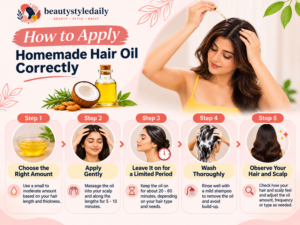
Step 1: Choose the Right Amount
Use enough oil to lightly coat the areas you want to condition. Long or thick hair may require more than short or fine hair, but avoid saturating your scalp and hair unnecessarily.
Step 2: Apply Gently
Use your fingertips to distribute the oil. If you massage your scalp, use gentle movements rather than vigorous rubbing or scratching. Rough handling can contribute to breakage.
Step 3: Leave It on for a Limited Period
For a pre-wash treatment, around 20–60 minutes is a reasonable starting point. Leaving oil on overnight is not necessary for everyone and may worsen scalp symptoms for some people.
Step 4: Wash Thoroughly
Use a shampoo suited to your scalp and hair. You may need to shampoo twice if you have applied a large amount, but avoid excessive washing that leaves your hair or scalp uncomfortable.
Step 5: Observe Your Hair and Scalp
Notice whether your hair feels softer and whether your scalp develops itching, redness, flakes or irritation. Stop using the blend if you experience an unwanted reaction.
How Often Should You Use Homemade Hair Oil?
There is no universal oiling schedule. Start with once a week and adjust according to your hair and scalp.
- Dry or coarse hair: A pre-wash oiling routine may help with conditioning.
- Fine or straight hair: Use a small amount because heavy oils may weigh hair down.
- Oily scalp: Keep oiling limited and focus on conditioning the hair lengths if needed.
- Dandruff-prone or itchy scalp: Avoid scalp oiling if it worsens symptoms and seek advice if the problem persists.
- Sensitive scalp: Use simple products and avoid essential oils if they trigger irritation.
You do not need to oil your hair every day. The best frequency is the one that leaves your hair manageable without causing scalp discomfort or excessive buildup.
Common Hair Oiling Mistakes to Avoid

Using Too Much Oil
Excess oil can make hair greasy, difficult to wash and heavy. Begin with a small amount and increase it only if necessary.
Applying Essential Oils Directly to the Scalp
Essential oils are concentrated. Applying them undiluted can cause irritation or allergic reactions. Follow product-specific dilution instructions and stop use if symptoms develop.
Leaving Oil on Despite Scalp Irritation
Burning, redness, and itching are not signs that an oil is working. Wash it off and discontinue use if irritation occurs.
Expecting Instant Hair Growth
Hair growth takes time and depends on several factors. A conditioning treatment may improve how hair looks, but it cannot reliably reverse genetic hair loss.
It also cannot reverse nutritional deficiencies or other medical causes.
Ignoring Persistent Hair Fall
Do not rely only on homemade remedies if your hair is thinning noticeably. Stress, illness, hormonal changes, medication, or nutritional issues that need assessment may contribute to hair loss.
Additional Tips for Healthier-Looking Hair
Use a conditioner after shampooing when appropriate for your hair type.
- Detangle gently, especially when hair is wet and more vulnerable to damage.
- Limit frequent high-heat styling and tight hairstyles that pull on the roots.
- Eat a balanced diet with adequate protein and a variety of nutrient-rich foods.
- Avoid taking high-dose hair supplements without medical advice.
- Choose shampoo based on your scalp needs rather than assuming that more oil means less hair fall.
- Seek professional advice for persistent scalp problems or noticeable thinning.
When Should You Consult a Dermatologist?
- Consider seeing a dermatologist if you have sudden or severe hair loss.
- See one if you notice bald patches or a widening part.
- Also seek care for ongoing thinning, scalp pain, strong itching, or persistent scaling.
A clinician can help identify the cause and discuss appropriate treatment. Homemade hair oil can be part of a conditioning routine. But it should not replace diagnosis or treatment for a medical problem.
Frequently Asked Questions
Which homemade hair oil is best for hair growth and thickness?
No proven homemade oil works best for everyone. Coconut oil may help condition hair and reduce protein loss. Evidence that most oils directly boost hair growth is limited. Choose an oil based on your hair type and scalp tolerance.
Can homemade hair oil make hair thicker?
Oil may make hair feel smoother and reduce some breakage, which can help it look healthier. It does not necessarily increase the number or diameter of hair follicles.
Can I apply homemade hair oil every day?
Daily application is not necessary for most people. Start with a small amount once a week and adjust based on your hair type. Reduce or stop use if your scalp becomes itchy or greasy.
How long should I leave hair oil on before washing?
Around 20–60 minutes is a reasonable starting point for a pre-wash treatment. Longer application is not automatically more effective, and overnight oiling may not suit everyone.
Does coconut oil help hair grow faster?
Coconut oil may help condition hair and reduce protein loss.
But this does not prove it makes hair grow faster. Do not treat it as a guaranteed hair-growth remedy.
Is rosemary oil good for hair growth?
Some research has investigated rosemary oil for certain types of hair loss, but the evidence remains limited. You must follow appropriate dilution instructions when you use it because concentrated essential oils can irritate the skin.
Can I mix coconut oil, almond oil and rosemary oil?
You can find many homemade recipes using multiple oils, but combining more ingredients does not guarantee better results. Keep the routine simple, avoid ingredients that may trigger allergies and dilute essential oils appropriately.
Is homemade hair oil suitable for dandruff?
Not always. Scalp oiling may worsen symptoms for some people with dandruff or an irritated scalp. If flakes, itching or redness persist, consider professional advice instead of repeatedly adding oil.
Can homemade hair oil stop hair fall?
It may help reduce breakage in some circumstances, but hair fall from the root can have many causes. A healthcare professional should assess persistent or sudden shedding.
How long does homemade hair oil take to show results?
Conditioning effects may show after use, but there is no set timeline for hair growth. Homemade oils don’t boost growth for everyone. Focus on reducing damage and seek medical advice if thinning continues.
Final Thoughts
Homemade hair oil for hair growth and thickness can be a useful part of a simple routine.
It can help condition dry hair and reduce avoidable breakage. Coconut oil is a practical starting point. Almond oil may also work well.
Properly diluted rosemary essential oil may suit some people. It depends on their needs and sensitivities.
Keep your routine simple, use ingredients safely and avoid expecting overnight results. If you notice ongoing hair loss or clear thinning, see a dermatologist. They can find the cause and discuss proven options.
At Beauty Style Daily, we believe that beauty begins with simple, consistent self-care. Explore our website for more helpful tips, guides and ideas on skincare, hair care, beauty Tips and makeup. Discover easy ways to care for yourself, enhance your natural beauty and feel confident every day!